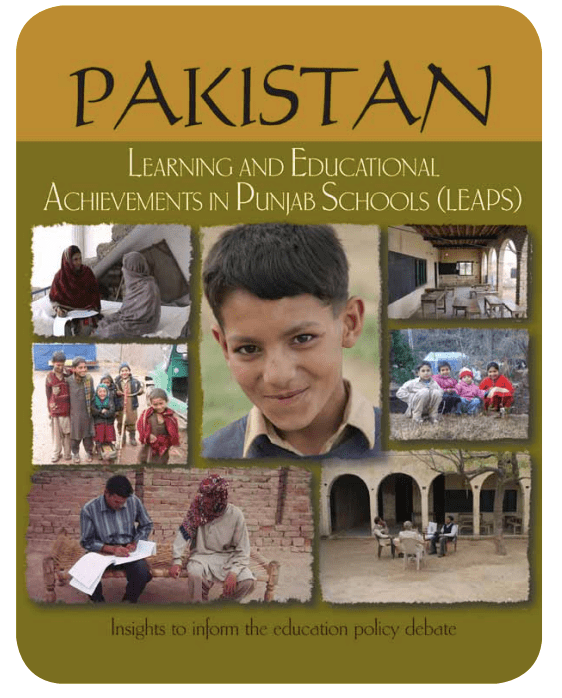
This blog introduces the youth-lead early childhood intervention program LEAPS (Learning and Educational Achievement in Pakistan Schools).
LEAP’s approach of training local young adults to deliver the pre-school education demonstrates how early childhood programming can address a multitude of the UN’s Sustainable Development Goals simultaneously. (Photo source: [1])
Pre-Primary Education in Rural Pakistan.
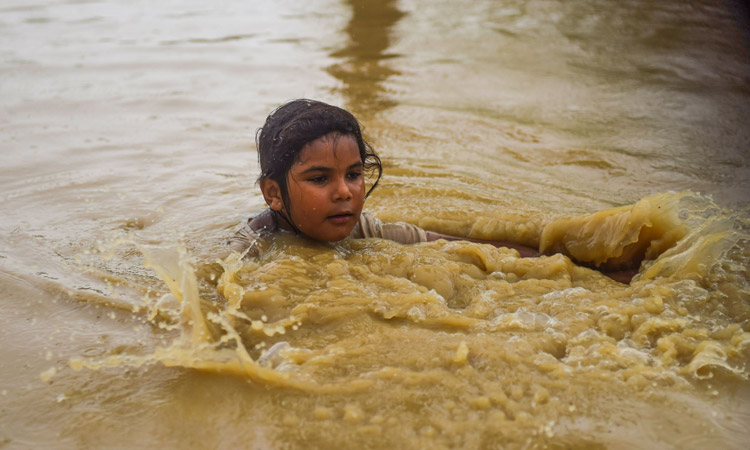
Aside from the infrastructural issues, coping with an ongoing increase in extreme weather events, food scarcity and a lack of parental understanding of the benefits of pre-primary education are a snap shot of some of the external hurdles that young children face in order to attend school [2][3] . The accumulative affect of these early life adversities negatively impacts a child’s brain development, which develops into life-long impacts to both the individual, and the economy [4]. (Photo of the August 2019 flash floods in Karachi, capital of Sindh Province [5]).
Children are often excluded from pre-primary education because there are not enough schools. Those schools that are available are usually overcrowded. Poor infrastructural conditions within schools, such as lack of furniture, no access to gendered toilets, and out of date curriculum materials leads to high drop-out rates. The major task in overcoming these issues is in addressing mismanagement, unclear roles and responsibilities and un-coordinated efforts at the government leadership levels [2].
What is LEAPS?
LEAPS (Learning and Education achievement in Pakistan Schools) is a research initiative engaging in a series of interventions to improve education and learning outcomes in Pakistan [6]. In 2016/17, LEAPS piloted a pre-primaryeducation program in the Sindh district, that trained 18 to 24 year-old females to deliver education programs for 3.5 to 6.5 year old children. The program was designed to simultaneously get children ready for primary school by developing their executive functioning skills and their readiness for school, whilst providing economic and professional opportunities for young adults [1] [7] [8].
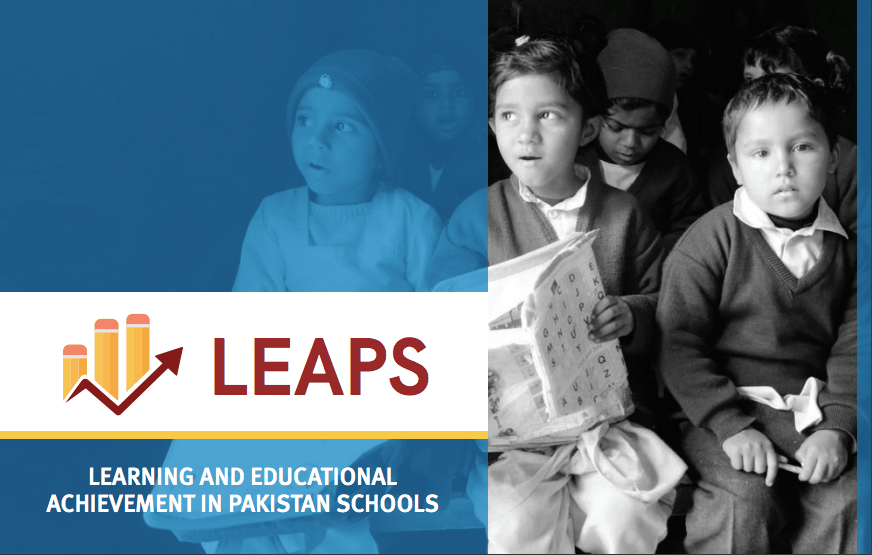
A Snapshot of this project:
The Community Youth Leaders
- 10 females aged between 18 and 24 with 10 years of education were recruited.
- They received one month’s basic training, and bi-monthly on the job supervision.
- They were responsible for running two, three-hour long classes five days a week with classes of 20 children.
- They received 5000 Pakistani rupees per month (£25.00), which at the time of implementation aligned with the government recommendations, and lower than the average pre-school teacher’s salary in the area.
The Children
- Children are aged between 3.5 and 6.5 years of age
- 170 children received the intervention.
The Community
- Family members and volunteers from the community were invited to help support in practical ways, such as filling water coolers, and supporting transport.
- Monthly community meetings, parent’s evenings and consultations were central to the program’s curriculum.
Results from the Pilot project.
LEAPS’ (2018) study compared 170 children enrolled in the LEAPS intervention, with 170 children who accessed the pre-existing available local education. Children’s readiness for primary school was measured using Save The Children’s international development and early learning assessment [9] tool, and a battery of executive functioning tasks.
Results found that children exposed to the LEAPS’ intervention were more ready for primary school, and had higher levels of executive functioning compared to those who did not receive the intervention. [8]
Also, findings from a focus group found that the young adults delivering the program developed professional skills such as leadership and communication, particularly as a result of the on-going mentoring component of the intervention [7]. These findings combined support LEAPS’ argument that cross-generational programming is a novel and innovative approach to achieving the UN’s Sustainable Development Goals.
The United Nation’s Sustainable Development Goals (SDG’s) is a non-legally binding goal based governance model designed to steer countries and institutions towards a set of global targets by the year 2030, and contains 17 key goals [10] [16]
How does LEAPS meet UN’s sustainability development Goals?
The need to increase both the quality and quantity of pre-primary education in countries such as Pakistan remains urgent, especially in rural communities where access and travel issues make implementation more challenging [4]. Starting primary school is a huge experience for most children. The plethora of external factors in the child’s environment mentioned earlier can hinder the development of their basic skills required to be ready to tackle the experiences of starting school [11].
Pre-primary learning programs such as LEAPS are effectively nurturing the various foundation’s required for young children to get the most out of their future education experiences. These programs thereby improve access to pre-primary education by funding the interventions, and they also bolster the quality of a child’s education in the future, by developing the child’s readiness for primary school. Also, the intergenerational approach to LEAPS’ Pilot meant the program also delivered quality education to 18-24 year olds, whom are also at a sensitive developmental age, and are under-served by the current education system in Pakistan. This differs from other similar projects train adults into the para-professional positions.
Women are systemically subordinated in Pakistan, which varies in severity between regions and classes. There remains a distinct divide in women’s literacy rates and opportunities for education, with women in rural areas worse off comparatively with urban dwellers [12]The LEAPS program targeted and employed women for the youth leader positions, to address the gender gap in employment rates.
Also getting married at a young age, and becoming a parent, even further restricts women’s opportunities for education, training, and employment[13]. Despite this,of the 10 women employed through LEAPS’ pilot intervention, 3 were married, and a further 1 had a child (Yousafzai, 2018). Not only does recruiting women actively address gender equality by positive discrimination, it also contributes towards the normalising of women in various life stages occupying professional roles, slowly disrupting a communities learnt views on gender inequality.
Training opportunities for late adolescents and early adults in Pakistan are limited and oversubscribed, despite also being a sensitive age range for neural development [14]. Utilising 18-24 year olds that are existing members of the rural community provides new employment and training opportunities, [4]. whilst simultaneously fostering community cohesion across the age ranges.
Also, early childhood programming has been demonstrated to significantly increase a child’s future earnings. This means that pre-primary education’s effect spans into an individual’s adulthood by increasing their economic productivity, and thereby stimulating the growth of the country [15].
The benefits of early childhood interventions on an individuals’ life course trajectory are well documented. Alongside this, programs such as LEAPS demonstrates how interventions can address multiple UN Sustainable development goals simultaneously. The challenge now is in co-ordinating the implementation of programs on a larger scale, to reach the wider population of at-risk young children in low middle-income countries such as Pakistan.
References
[1]. Andrabi, T., Das, J., Khwaja, A. (2018). LEAPS: Learning and educational achievement in Pakistan Schools. Retrieved from https://epod.cid.harvard.edu/sites/default/files/2018-11/LEAPS%20Brochure.pdf
[2]. UNICEF. (2013). Out-of-school children in the Balochistan, Khyber Pakhtunkhwa, Punjab and Sindh provinces of Pakistan. Islamabad, Pakistan: UNICEF Pakistan. https://unesdoc.unesco.org/ark:/48223/pf0000224501
[3]. Rees, N., & Anthony, D. (2015). Unless we act now: the impact of climate change on children. United Nations International Children’s Fund (UNICEF). https://www.unicef.org/publications/index_86337.html
[4]. Black, M. M., Walker, S. P., Fernald, L. C., Andersen, C. T., DiGirolamo, A. M., Lu, C., … & Devercelli, A. E. (2017). Early childhood development coming of age: science through the life course. The Lancet, 389(10064), 77-90. https://doi.org/10.1016/S0140-6736)16)31389-7
[5] Gulf Today. (2019). Video: Over 160 killed as heavy rain wreaks havoc in Pakistan. Retrieved from: https://www.gulftoday.ae/news/2019/08/12/over-160-killed-as-heavy-rain-wreaks-havoc-in-pakistan
[6] Harvard Kennedy School. (n.d) Retrieved from https://epod.cid.harvard.edu/initiative/leaps-program#about
[7] Franchett, E. E., Yousafzai, A. K., Rasheed, M. A., Siyal, S., Reyes, C. R., & Ponguta, L. A. (2019). Experiences of community youth leaders in a youth-led early childhood education program in rural Pakistan. Zeitschrift für Psychologie. https://doi.org/10.1027/2151-2604/a000362
[8] Yousafzai, A. K., Rasheed, M. A., Rizvi, A., Shaheen, F., Ponguta, L. A., & Reyes, C. R. (2018). Effectiveness of a youth-led early childhood care and education programme in rural Pakistan: A cluster-randomised controlled trial. PloS one, 13(12). https://doi.org/10.1371/journal.pone.0208335
[9] Save the Children. (n.d) IDELA Data. Retrieved from: https://idela-network.org/
[10] Biermann, F., Kanie, N., & Kim, R. E. (2017). Global governance by goal-setting: the novel approach of the UN Sustainable Development Goals. Current Opinion in Environmental Sustainability, 26, 26-31. https://doi.org/10.1016/j.cosust.2017.01.010
[11] Arnold, C., Bartlett, K., Gowani, S., & Merali, R. (2007). Is everybody ready? Readiness, transition and continuity: Lessons, reflections and moving forward. background paper for the EFA Global Monitoring Report. https://www.akdn.org/sites/akdn/files/media/documents/various_pdf_documents/2006_akf_edu_-_ecd_-_is_everybody_ready.pdf
[12] Lloyd, C., Mete, C., & Grant, M. (2007). 4 Rural girls in Pakistan: Constraints of policy and culture. https://www.researchgate.net/publication/313557083_Rural_Girls_in_Pakistan_Constraints_of_Policy_and_Culture
[13] Patton, G. C., Sawyer, S. M., Santelli, J. S., Ross, D. A., Afifi, R., Allen, N. B., … & Kakuma, R. (2016). Our future: a Lancet commission on adolescent health and wellbeing. The Lancet, 387(10036), 2423-2478.https://doi.org/10.1016/S0140-6736(16)00579-1
[14] Yousafzai, A. K., Rasheed, M. A., Siyal, S., Franchett, E., Sudfeld, C., Ponguta, L, A., Reyes, C., Fink, G. (2019). LEAPS: a strategy to benefit young children and youth. Retrieved from https://earlychildhoodmatters.online/2019/leaps-a-strategy-to-benefit-young-children-and-youth/#heading_4
[15] Engle, P. L., Fernald, L. C., Alderman, H., Behrman, J., O’Gara, C., Yousafzai, A., … & Iltus, S. (2011). Strategies for reducing inequalities and improving developmental outcomes for young children in low-income and middle-income countries. The Lancet, 378(9799), 1339-1353. https://doi.org/10.1016/S0140-6736(11)60889-1
[16] UN. (n.d) Sustainable Development Goals: Knowledge Platform. Retrieved from https://sustainabledevelopment.un.org/
 Ben Ford Global Early Childhood
This is a very referential blog which discuss a specific are in early childrenhood development programme especially in Pakistan abhors rural areas. You gave a good description of how the project would operate in the designated area and listed a number of essential elements of the project plan, such as the requirements for staff and the conditions for children. This combined with the background you’ve written, quickly makes clear the importance of developing early childhood education programs. About you put forward the difference between China and Pakistan in the project, may be due to the China region to improve the standards of the participants (for the sake of safety and responsibility), was published in the United Nations children’s development of China’s regional report, repeatedly emphasized to establish a community focused professional early childhood education center. However the programme in Pakistani has a good track record, which is a good guide to similar programs in other countries and regions.
LikeLike